History
NeonatoX wasn't born because Linux was broken.
It was born because I truly wanted to understand it.
For many people, free software is just "using free stuff." For me, it always meant something deeper:
- The freedom to modify.
- The freedom to build.
- The freedom to understand what's really happening inside the machine.
I didn't want to install a distribution. I wanted to experience those freedoms firsthand.
The beginning
Everything changed the day I discovered Linux From Scratch.
At first it was just copy-pasting commands. But at some point, it clicked. I stopped following instructions and started understanding why things were done that way: the toolchain, glibc, the kernel, the paths, the environment variables…
That was the moment Neonatox stopped being just a crazy idea.
First versions
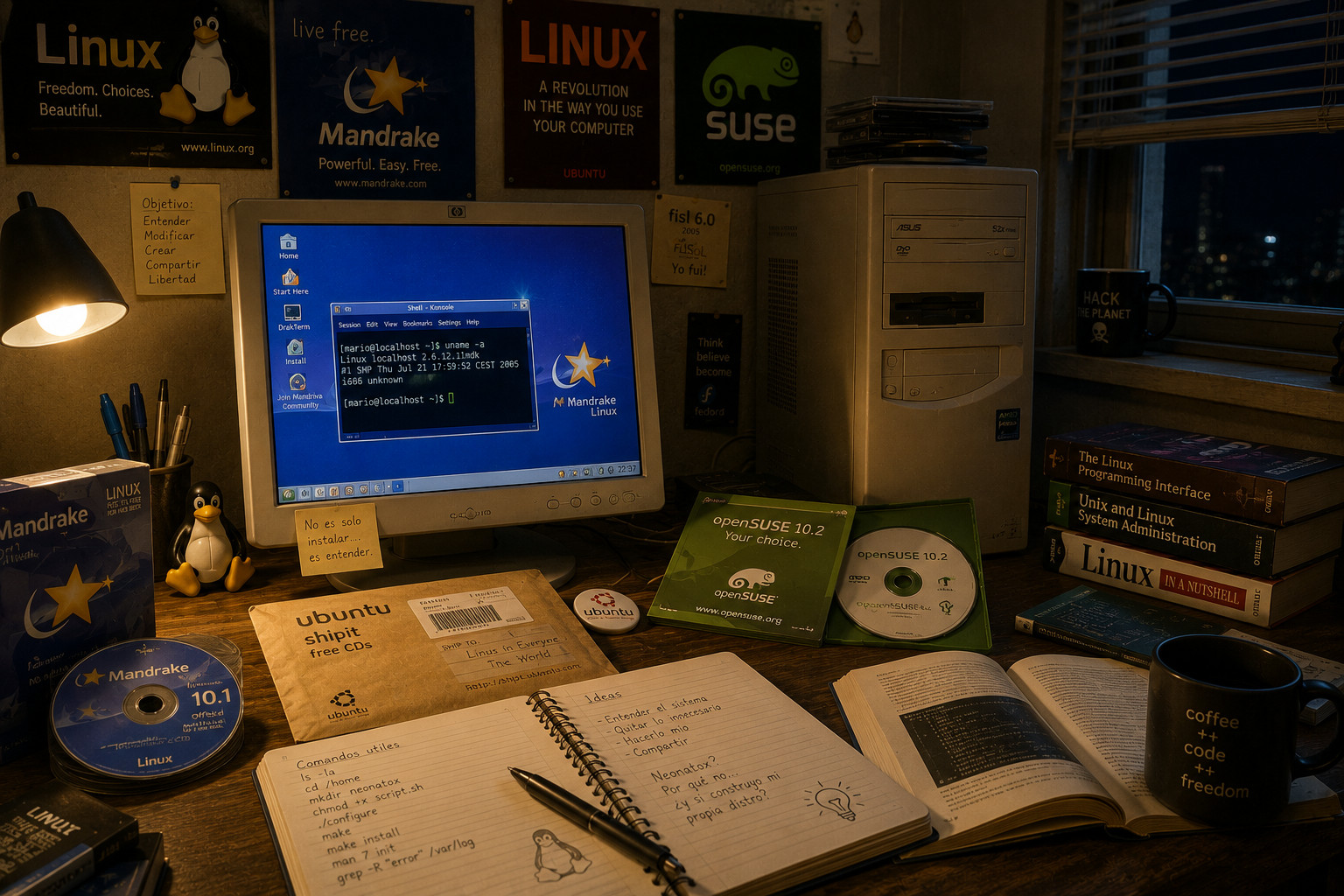
The first versions were a beautiful disaster. No package manager, everything compiled by hand. I especially remember compiling XFree86… it was traumatic.
That experience made it clear I needed modularity, reproducibility, and real control.
Origin of the name
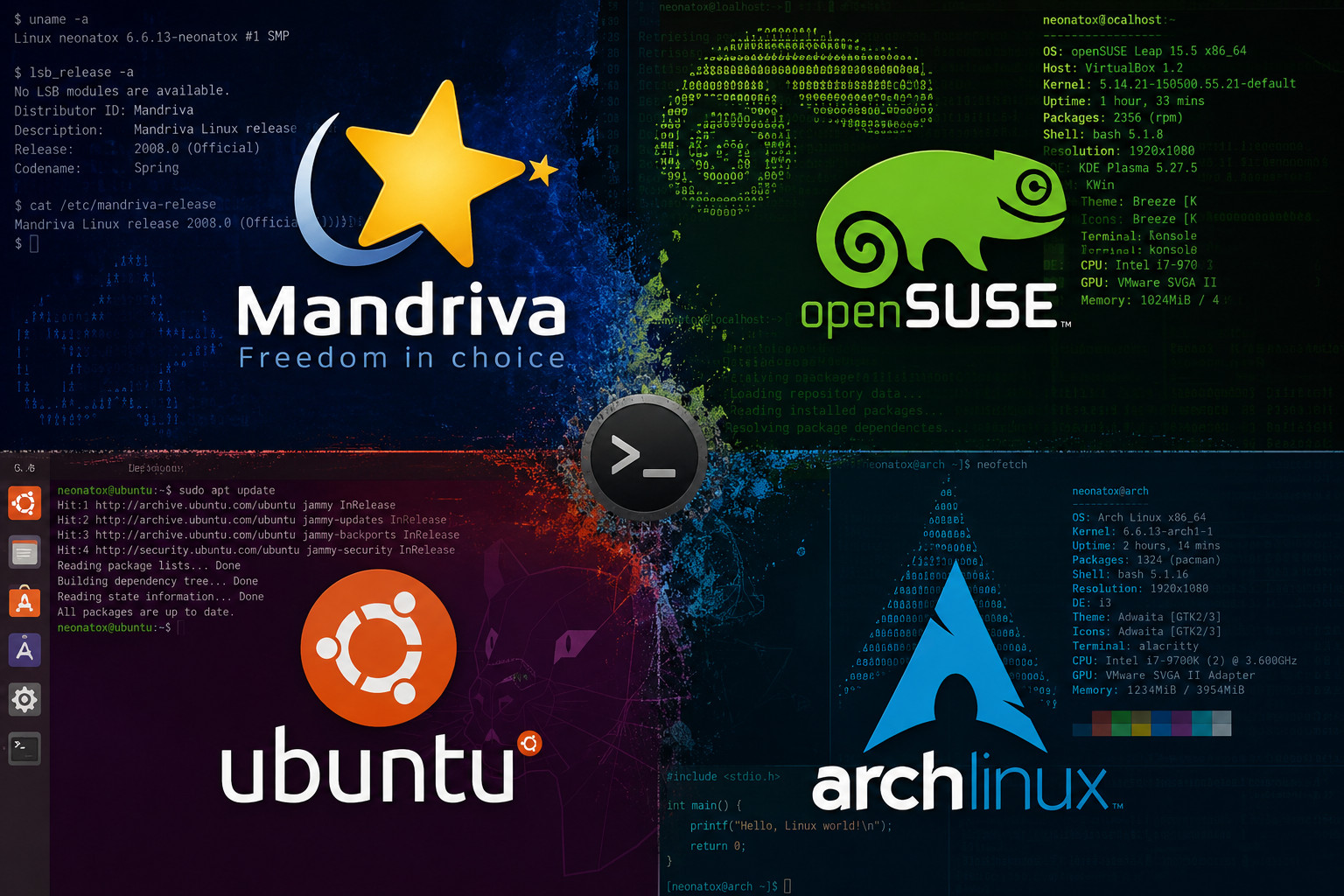
The name Neonatox came up in a conversation with my brother. I was explaining that I wasn't modifying any distro, but creating something from scratch. Then he said:
"It's like a neonate… but with an X" → Neonatox
A system being born from scratch.
nhopkg
Then came one of the project's pillars: nhopkg.
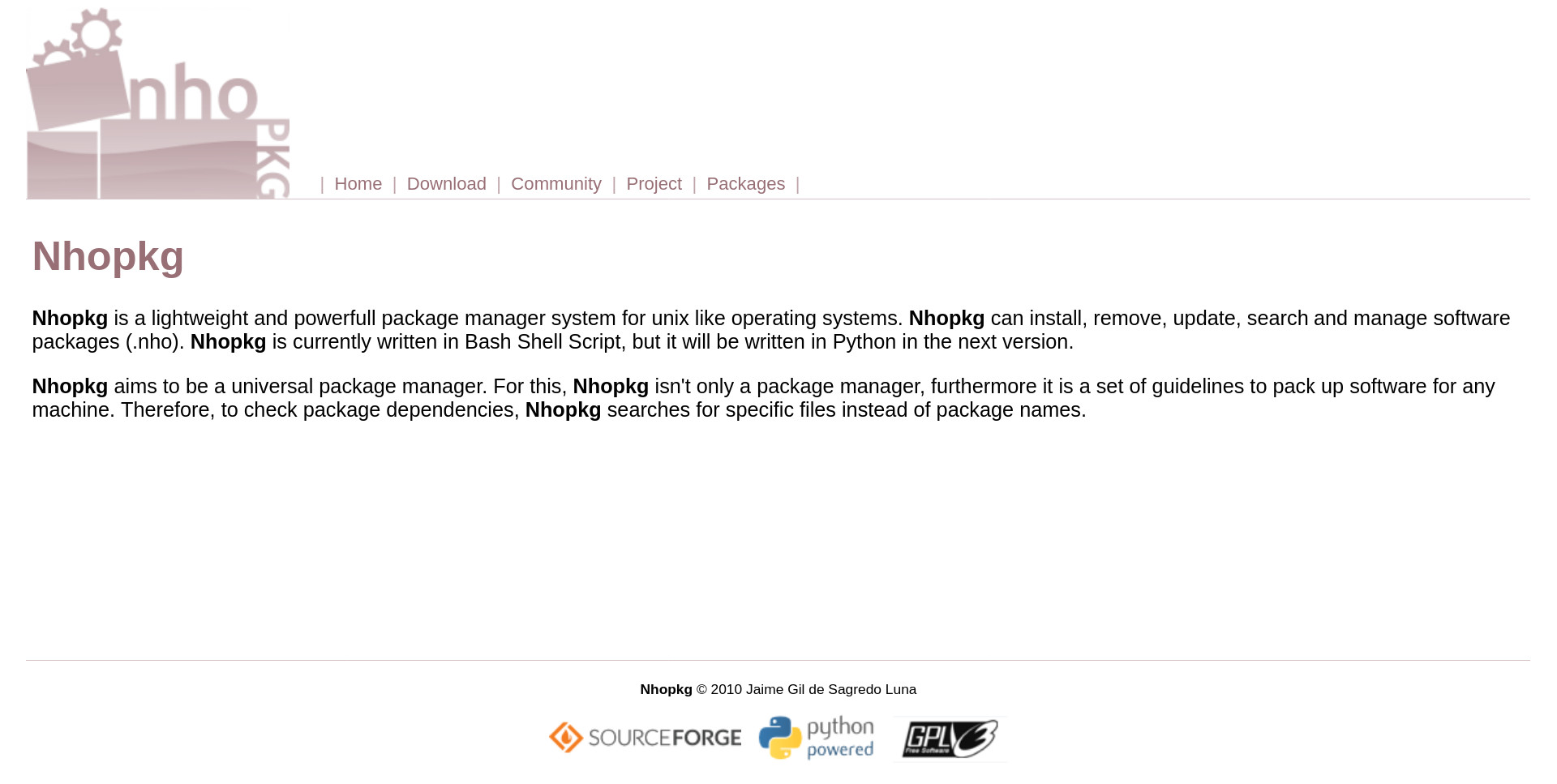
Originally created by Jaime Gil for his project Nhoax, this package manager was simple, understandable, and adaptable. When Jaime left the project, I decided to continue it and adapt it to Neonatox.
The pause
Like almost all personal projects, Neonatox also had its winter. Years where real life won. The project froze, not from lack of desire, but because it simply wasn't the right time.
The return (2023)
When I came back, I did it with a different mindset. With more experience and clarity. What was once a messy experiment began to turn into something more serious and structured.
Today
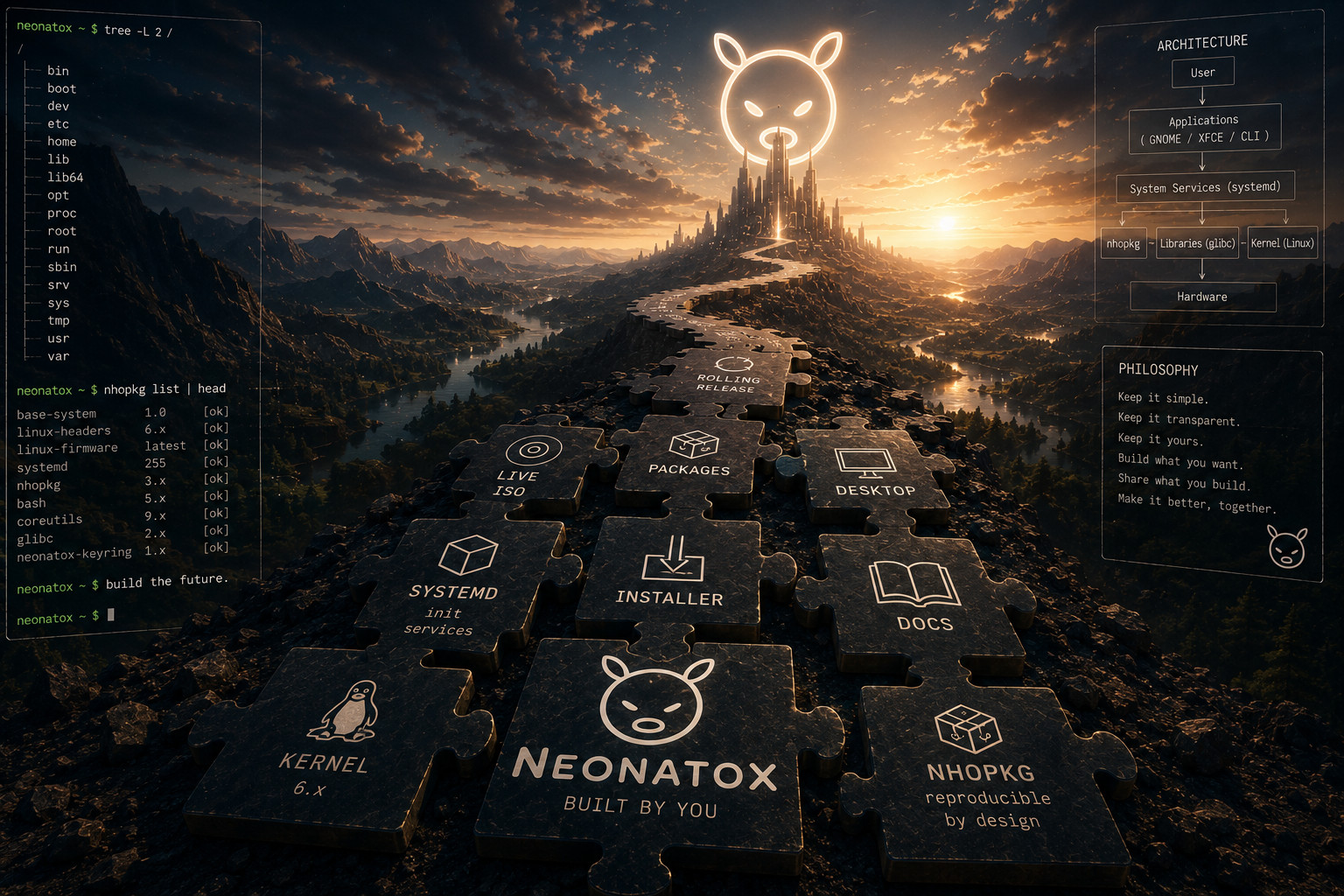
NeonatoX is, above all, a puzzle.
It's not just another distribution. It's a platform to learn, break things, rebuild them, and understand how an operating system really works.
And it's still here. It wasn't abandoned.
It was just waiting for the right moment.